An FPO that aggregates 300 acres of grapes or pomegranate for export can lose a whole container over one input bought in haste by one member. The spray that went on in week 34 leaves no smell and no visible harm, but the residue panel comes back red four weeks after the fruit lands at the port. This guide builds the one control point that stops that: an NPOP input checklist enforced at the purchase counter, before anything reaches a member's field. It covers the four checks on every input, the records to collect at the moment of sale, the harvest window math that keeps produce residue-free, and the growing season calendar for rabi 2026-27 around November 2026.
The reader here is an FPO aggregation manager, a cluster coordinator or a purchase centre head who already knows the certification exists but has no working gate on input entry. The aim is a repeatable routine your staff can run in a couple of minutes per invoice, not another register nobody reads.
Why the Purchase Counter Is the Right Control Point
Most FPOs put their effort at the far end of the season, at harvest collection, when residue risk is already fixed in the soil and on the crop. A gate at purchase moves the decision earlier and cheaper. Nothing sprayed can be unsprayed, but a rejected bag of input costs a member a trip back to the market.
It also protects the cluster's paperwork. Under NPOP, an input used on certified land must appear on the approved input list your certification body issued, with the brand, manufacturer and batch traceable to a purchase bill. If the input entered the field without that trail, the internal inspector has nothing to show at the annual inspection, and the plot's certificate is at risk regardless of what was actually in the bottle.
Three things happen at the counter that no field visit can replicate later: you see the label, you see the batch number, and you can still say no.
The Four Checks on Every Input
Run these in order. A pass on all four lets the input through with a stamp on the invoice. Any fail means the input goes back.
- Approved list match. Open the current approved input list from your certification body and confirm the exact product name and manufacturer, not a similar name from the same company.
- Registration and licence numbers. Chemical pesticides must carry a CIB&RC registration number; microbial and botanical inputs must carry the manufacturer's licence and the certificate of analysis for that batch.
- Batch and expiry legibility. The batch number, manufacturing date and expiry must be printed on the pack itself, not on a loose slip that can fall off in a truck.
- Crop and stage fit. Check that the crop and the growth stage on the label match what the member will actually use it for, since off-label use is a common source of unexpected residues.
Keep the list to these four. A longer checklist gets skipped by the second week of a busy purchase season.
What to Collect at the Moment of Sale
The invoice alone is not a record. Ask for these five items at the counter and file them with the plot code, not in a separate purchase file.
- Invoice with plot code. Write the member's plot code on the invoice before it goes into the file, so a purchase can be traced to a mapped plot.
- Batch number entry. Enter batch number and expiry in the input register against the plot code on the same day.
- Certificate of analysis. For bio-inputs and humic or seaweed products, collect the batch COA from the supplier and staple a copy to the invoice.
- Empty pack return. One empty pack returned per litre or kilogram bought closes the loop on how much actually reached the field.
- Spray diary update. The member signs the spray diary entry at the counter, which stops the later habit of filling diaries from memory.
For a working model of the record set, our earlier walkthrough of NPOP certification export crop records shows the register layout an inspector expects.
The Input Register Table
The register is one row per purchase. The columns below are the minimum; anything extra belongs in an annex, not in the main sheet.
| Field | Entry | Note |
|---|---|---|
| Input name | Exact label name | Not a trade abbreviation |
| Batch and expiry | Printed batch plus expiry date | Copy from the pack, not the bill |
| Approved list status | Approved or conditional | Conditional needs inspector note |
| Harvest interval (days) | 7-30 | Read from the label |
| Plot code | Member plot code | One row per plot |
The harvest interval column is the one that saves containers. Read it off the label for the crop and rate the member will use, which for most registered products falls between 7 and 30 days. Where a label gives a range, write the longer figure, and where the label says nothing about a pre-harvest interval for your crop, treat the input as unusable on an export plot until your certification body confirms otherwise.
Harvest Window Math for Residue-Free Lots
Convert every interval into a calendar date at the counter, not at harvest. Say your cluster holds 250 acres of grapes near Nashik and a member buys an input whose label gives a 21-day interval. Write 21 on the register row, then write the earliest lawful harvest date for that plot in the same row. Anyone reading the sheet in February can see whether a planned pick is legal without opening a label.
Three rules keep this honest:
- Take the longest interval. Where a label lists different intervals for different pests or rates, use the longest, since that is the one a lab panel will test against.
- Reset on every spray. A later spray restarts the clock on that plot, so the register date moves forward, not the harvest date.
- Hold the buffer. Add a few days beyond the label interval before booking the container, because transit and cold storage do not clear residues on a schedule.
Cluster the plots by earliest lawful harvest date and pick in that order. A lot that must be picked early to catch a vessel is the lot most likely to fail a panel, so it should be the lot tested before loading, not after.
The November Input Calendar for Rabi 2026-27
November 2026 sits in the middle of rabi sowing and early establishment, so the gate is busiest now for wheat, mustard, gram, onion, garlic and the nursery beds for summer vegetables. The schedule below is the typical rabi sequence; match every entry to your own label and your state agricultural university's advisory for your district.
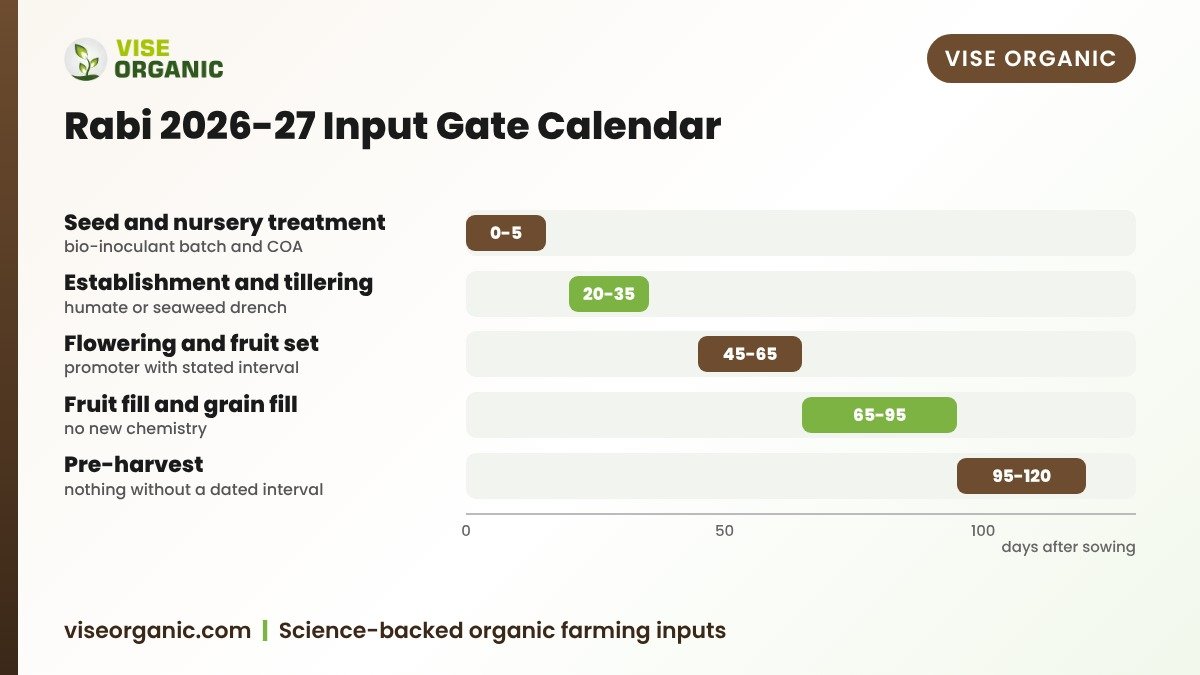
Seed and nursery treatment in the first five days is where a cluster can cut chemical load the most, because a microbial Seed treatment replaces a chemical seed dressing on many crops. Between 45 and 65 days, flowering and fruit set, most clusters switch to plant growth promoters and seaweed or amino-acid products, which is exactly where an unregistered "booster" bottle tends to enter a village market. Put the four checks to work hardest in that window. Our Zaid flowering and fruit set plan for chilli and okra covers that stage crop by crop for the following season.
What to Reject at the Gate
Some items never pass, no matter how good the dealer's reputation is.
- Unbranded loose packs. Any input decanted into an unmarked bottle, with no label, batch or licence number.
- Packaged goods with no CIB&RC number. A chemical pesticide sold without registration has no lawful use on any plot, certified or not.
- Products with no stated interval. A growth promoter or botanical that names no pre-harvest interval cannot be scheduled against a harvest date.
- Grey-zone blends. Mixtures of a microbial carrier with a chemical active that the label hides in a composition line.
- Inputs off your approved list. Anything absent from the list your certification body issued, including a well-known brand in a new formulation.
- Damaged or swollen packs. A bloated liquid pack points to heat damage or a dead carrier, and the batch is not traceable to a sound COA.
Rejecting a member's purchase creates a conversation, and that conversation is the cheapest training your FPO runs all season. Answer it by stocking the counter with approved alternatives so a rejection is a swap, not a loss.
Building an Approved Input List That Members Actually Use
A gate with nothing behind it fails. Keep a short, well-stocked shelf of approved options so a rejected item can be replaced the same day.
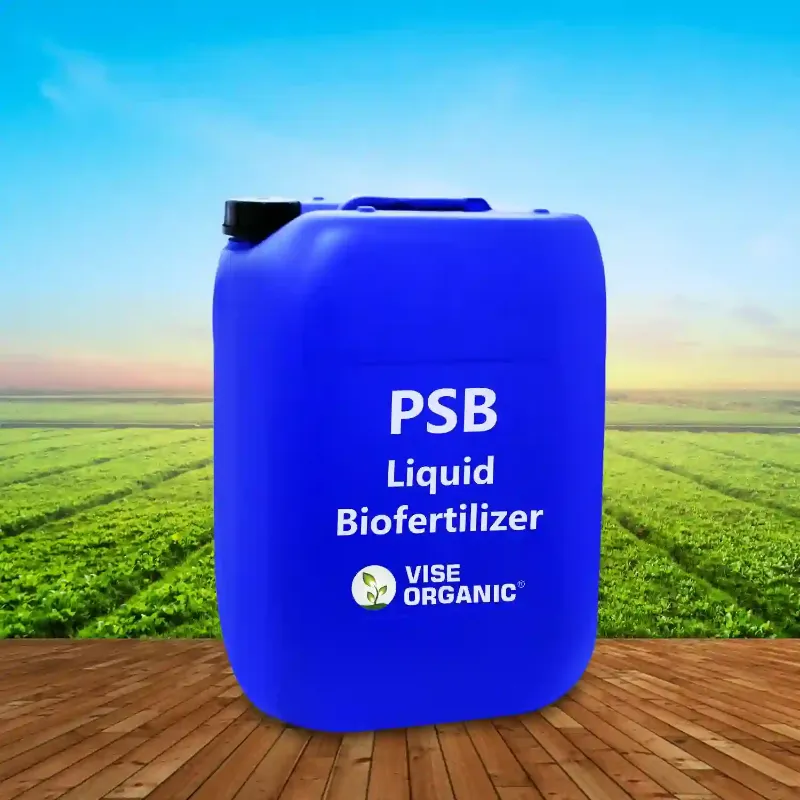
- Two microbial options per need. Keep a nitrogen-fixing liquid such as Azotobacter Liquid Based and a phosphate option such as Phosphate Solubilizing Bacteria in stock for seed and root-zone use.
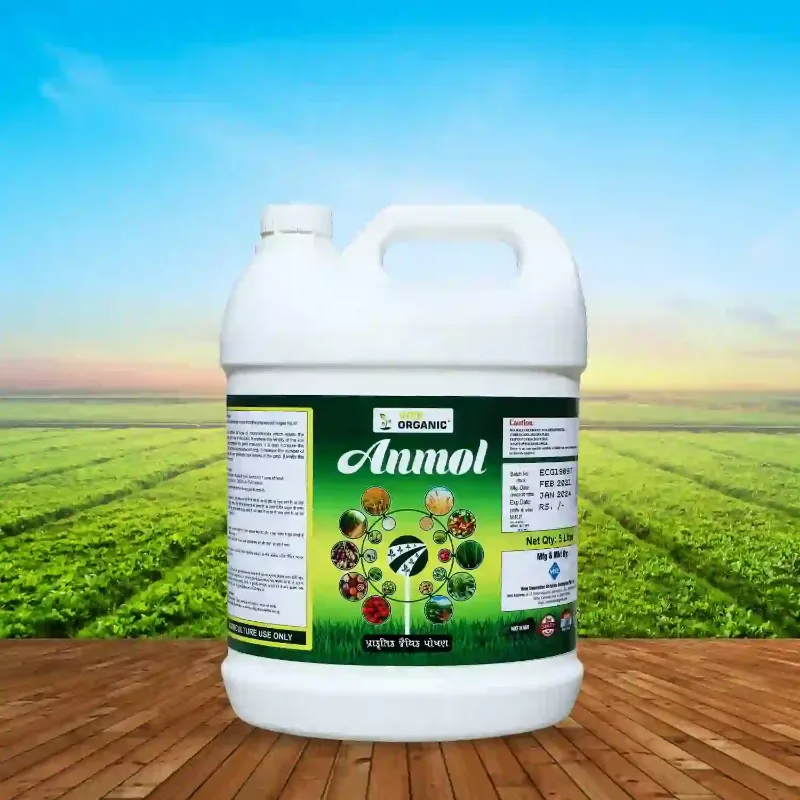
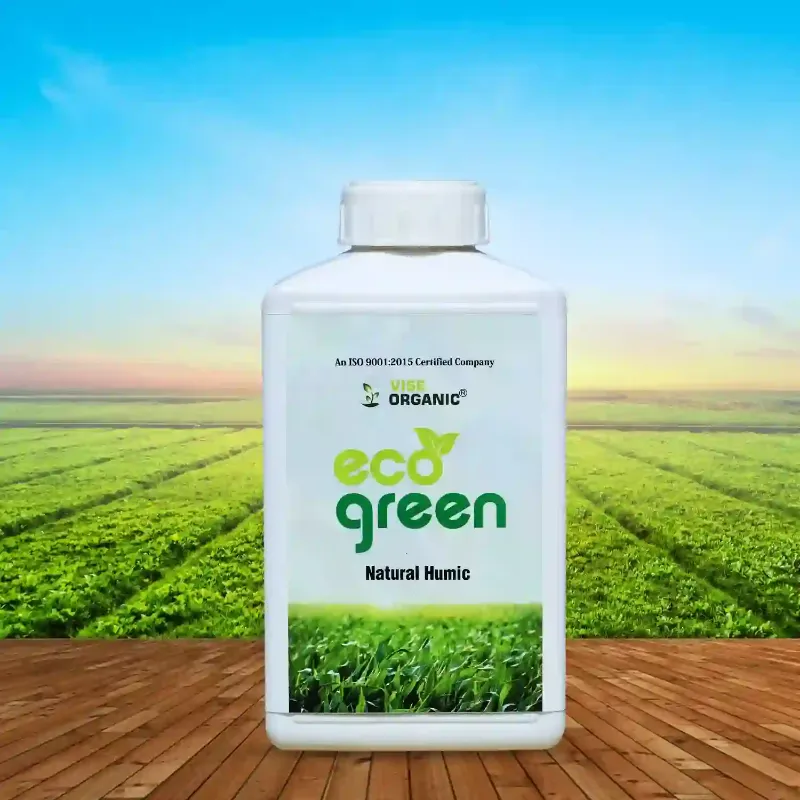
- One humate and one seaweed line. A potassium humate drench like Eco Root and a seaweed extract such as Seacure Liquid cover establishment and stress periods.
- A crop-specific promoter. For an onion or garlic cluster, a Nutri Diamond type product with a clear label and interval is easier to schedule than a general tank mix.
- A spread adjuvant. A Silk type spreader lets members cut spray volume and stay on label rate.
- A bio-protection option. An approved botanical such as Eco Cover gives members a lawful answer to early pest pressure.
Every dose on the shelf is whatever that product's label states for that crop. Publish the shelf as a one-page list with the label interval printed beside each item, and put the same list in the members' WhatsApp group before the purchase season opens. See the full range in Our shop.
Safety and Label Discipline at the Counter
The counter is also where safety habits are set. Staff should handle sample packs with gloves, never decant concentrates by hand, and keep any stock away from direct sun and heat, since microbial carriers lose viability in a hot godown. Store liquid bio-inputs in a shaded, ventilated room, off the floor, and well away from children. Do not tank-mix a microbial product with a chemical fungicide or bactericide unless that product's label explicitly allows it, and never store bio-inputs on the same shelf as registered pesticides.
Ask every supplier for the batch certificate of analysis in writing, keep it with the invoice, and treat a supplier who cannot produce one as an unapproved supplier. For organic plots, remember that the certifier's rules decide what is allowed on certified land; a product being biological in nature does not by itself make it approved for your certified area.
Frequently Asked Questions
Who decides which inputs go on an FPO's approved input list?
Your certification body issues the approved input list for your certified area under NPOP. The FPO can narrow that list for its counter but cannot add items to it on its own, so any new product goes to the certifier for review before it is stocked.
Is a purchase invoice enough proof for an internal inspection?
No. The invoice shows a sale, not a use. Inspectors look for the invoice plus the batch number in the input register against a plot code, and a spray diary entry signed by the member for the same date.
What is the safest way to handle a member who insists on a chemical spray?
Record it, do not let it onto a certified plot, and offer an approved alternative from your shelf. If the plot is in conversion, the certifier's rules and the waiting period decide what happens next, not the FPO.
How do I set the pre-harvest interval when a label gives a range?
Use the longest figure in the range and add a few days of buffer before booking transport. Where the label names no interval for your crop, treat the input as unusable on an export plot until your certification body confirms it in writing.
Do bio-fertilizers and seaweed products need a pre-harvest interval too?
Follow the label. Many microbial and seaweed products carry a short or no interval, but the register entry and the batch record are still required on certified land, and a label that states an interval must be respected like any other.
How many empty packs should an FPO collect back?
Aim for one empty pack per litre or kilogram purchased, matched to the invoice. Pack returns are the fastest way to confirm that bought volume and applied volume are the same number.
Can a dealer sell input to FPO members without the gate?
A dealer can sell whatever is lawfully registered, but your cluster's certificate is what is at stake. Make approved-purchase a condition of the buy-back agreement so members route their input buying through the counter.
Conclusion
An NPOP input checklist works when it lives at the purchase counter instead of a binder: four checks on every input, five records filed against a plot code, and a harvest interval written as a date on the day of sale. Run it through the rabi flowering window, when unregistered boosters circulate most, and your residue-free export lots stop depending on one member's memory. Set the gate up in the next purchase week, then review the rejected items with your certification body so the approved list grows with the season. Talk to the team at Vise Organic or Request a callback for a cluster-level input list and batch documentation support.
Disclaimer: This article is general agronomic information. Results vary with soil, crop, weather and practices. Always read and follow the product label and consult a local agronomist for advice specific to your field.
Article Topics & Tags:
Vise Agronomy Team
The in-house agronomy and field research team at Vise Organic Biotechnology, publishing applied research on bio-fertilizer protocols, crop protection, and sustainable cultivation practices.