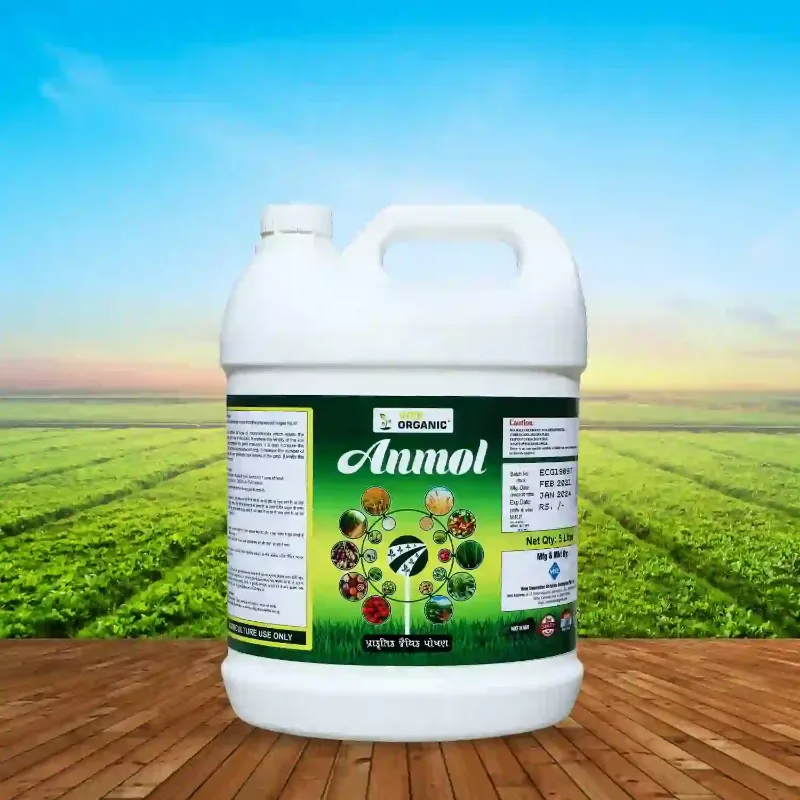
The phone rings in October and the buyer asks for the input book of your block before he asks for the sample. If your records for the last three years are loose, the grape lot waits at the port while someone else's container moves. This guide gives one NPOP export residue plan for grapes, from flowering to harvest, with the records a certification body and a foreign buyer actually want to see.
It covers the stage-wise schedule for a rabi grape block in Maharashtra, what to write in the input log, how to keep the spray list residue-free against MRL limits, and what dealers and FPOs should keep ready for a group certification.
Where This Plan Fits in the Grape Year
Grapes in Maharashtra run on a rabi cycle. You force pruning around June to July in Nashik and Sangli, and again in October to November for the Christmas and New Year export window. Flowering lands in the cool dry months, and berry development runs through December and January.
That calendar matters because the residue clock starts at flowering. Every input you carry onto the block between flowering and harvest has to appear in the log with a date, and the harvest date has to be far enough from the last application for the residue to fall below the importing country's MRL. A plan written after fruit set is already late.
Read the NPOP Rules Before You Buy Anything
NPOP is the National Programme for Organic Production run by APEDA under the Ministry of Commerce and Industry. It sets the production standards, the approved input list and the certification process for organic farms in India. The Official NPOP portal carries the current standards and input list, and the list changes, so check it before you plan a season rather than after.
Three things decide your eligibility on a grape block:
- Approved inputs only. Every fertilizer, biopesticide and adjuvant used must appear on the NPOP approved input list, with the brand and batch you actually bought.
- A conversion period. A block that has carried synthetic fertilizers and pesticides needs the conversion period stated in the current standard before it can be sold as certified organic.
- A defined boundary. The certified block must be separable from the rest of your farm, with a buffer that stops drift and runoff from a neighbouring conventional plot.
Certification is done through an accredited certification body, not by the government directly. Ask the body in writing which standard version and which input list they are auditing against. For the paperwork side of group certification, our NPOP records guide covers the register formats.
Build the Input Log First, Not Last
The log is the single document that decides whether an audit passes. Keep one register per block, not per farm, in a notebook that cannot be rewritten, and enter every input on the day it goes into the field.
Each entry needs these fields:
- Date and time. The day the input touched the field, not the day you bought it.
- Block and area. Which plot and how many acres or square metres were covered.
- Product and batch. Brand name, manufacturer, batch number and the batch certificate reference.
- Dose and water. Label dose per acre and litres of water used per acre.
- Operator. Who sprayed, so a gap in the record has a name.
- Cross-reference. The invoice number and, for a treated lot, the lab report number.
Keep invoices in a file by season and store the completed log for at least five years. A buyer's traceability team asks for the season, not the week, and a log that only covers the current year raises a question you cannot answer.
Stage-Wise Schedule for a Rabi Grape Block
The table below is a typical label-based schedule for a Thompson Seedless block on rabi cropping. Doses are the label rates printed on each pack, not a fixed recommendation. Confirm the current label and check with your local KVK or CRRI Pune before you change anything.
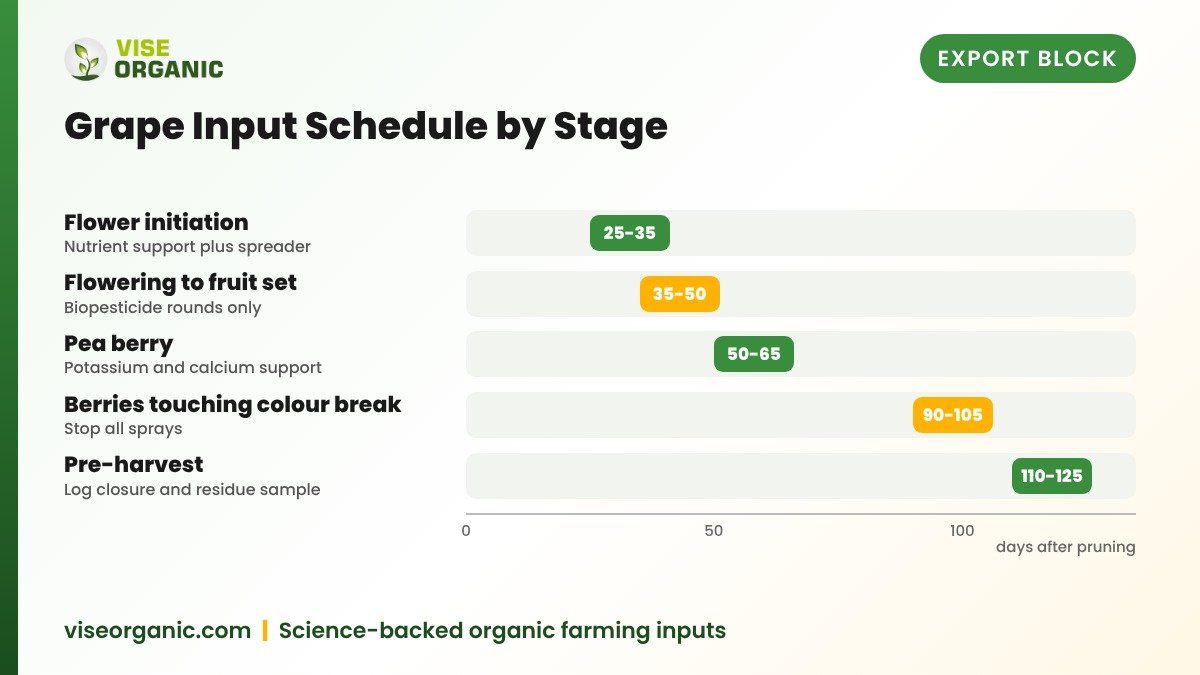
Two rules sit above that table. First, nothing synthetic goes on a certified block at any stage. Second, all spraying stops at colour break, which gives the residue the longest possible window to fall before harvest.
Flower Initiation to Fruit Set
This is the window where bunch architecture is decided, and where most growers over-spray out of fear of thrips. Start with a nutrient drench or foliar feed at the label rate to carry the vine through flowering. A Special PGR for table grapes or an Amino acid carrier is a common choice here.
Add a Spread adjuvant to the tank. Grape canopy under a pergola is dense and a droplet that sits on the upper leaf surface never reaches the bunch. Better coverage at the same dose means fewer rounds and less residue to explain later.
For pest cover, use a botanical or microbial spray from the approved list such as our Organic fungicide, spaced as the label directs. Rotate between two different modes of action rather than repeating one product.
Pea Berry to Colour Break
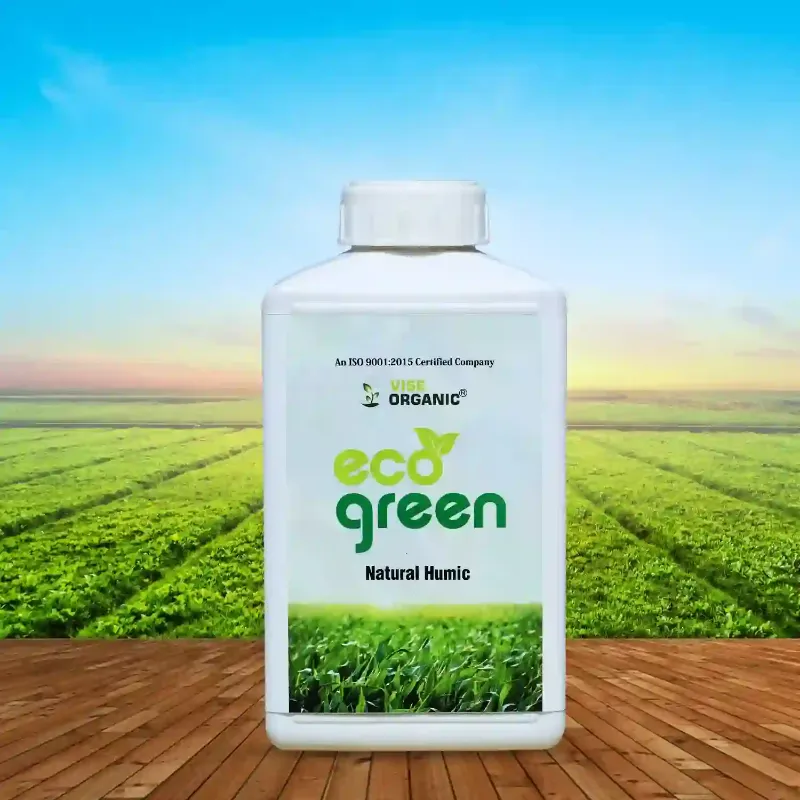
Now the berry takes size and firmness. Potassium and calcium support in this window is what buyers notice as berry size and shelf life. A Seaweed extract supplies potassium and natural plant compounds, while a Humic acid works on the root zone to hold moisture through the dry winter.
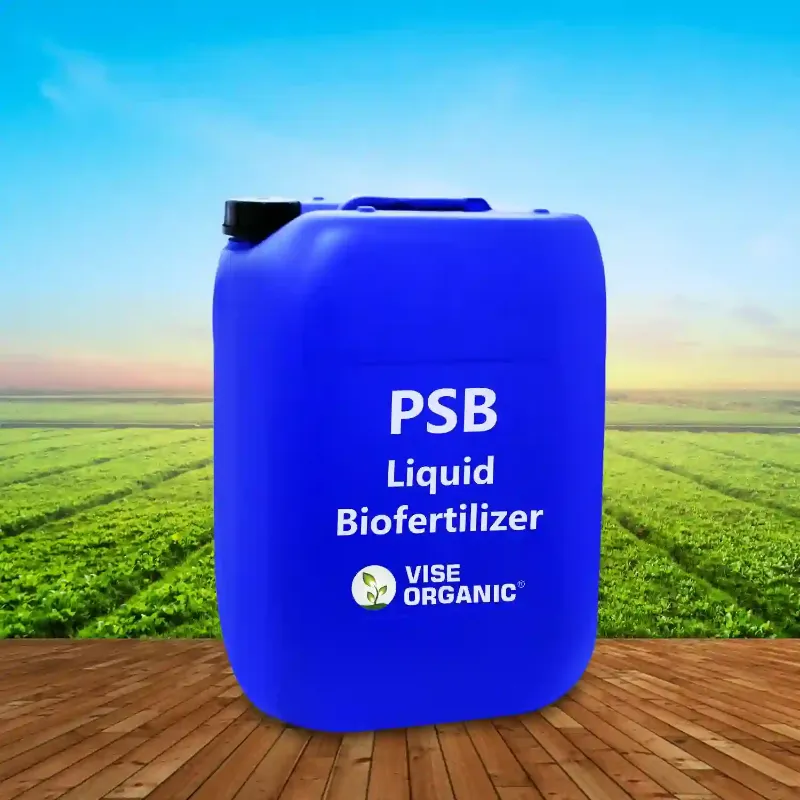
Keep the soil biology alive through the whole cycle. PSB and a Potash mobilizer applied as a drench through the fertigation line help the vine use the phosphate and potash already locked in the soil, which is what an organic block depends on. If you are comparing this schedule with a field program for annual crops, our Rabi flowering and grain fill plan follows the same logic on wheat.
Residue, MRL and the Rejection You Can Still Avoid
MRL means maximum residue limit, the ceiling a importing country allows for each pesticide on a given crop. The same grape can clear one market and fail another, because the limits differ. A grower in Lasalgaon can follow the Indian standard honestly and still lose a lot in the European Union.
Three habits prevent most rejections:
- Know the destination, not just the crop. Ask your buyer or FPO which market the lot is going to, and get that market's MRL list for grapes before you plan the season.
- Keep a buffer spray list. Decide in advance which two or three approved products you will rotate, and write them into the log template so no one improvises in the field.
- Test the block, not the tank. Draw a composite berry sample at colour break and send it to an NABL-accredited lab. A report in the file is worth more at audit than any verbal assurance.
A clean grape lot is a paperwork lot: the block that gets tested before harvest is the block that does not get tested at the port.
Harvest records close the loop. Record the harvest date, the crate count, the lot number and the packhouse name for every picking, and keep the packhouse declaration that no non-approved substance touched the fruit after it left your gate.
What to Check Before Buying in Bulk
A block under an export plan cannot afford an input that fails a batch test, so buying changes when you are certifying. Ask for these documents before the order, not after delivery.
- Batch certificate. A certificate of analysis for the exact batch, showing the microbial count or content and the test method.
- Approval status. Written confirmation that the product sits on the NPOP approved input list, with the brand name as printed on the pack.
- Packing and seal. Sealed, tamper-evident packs with a legible batch number, manufacturing date and expiry printed on the label.
- Shelf life on arrival. At least eight to ten months of shelf life left, because a bio product that reaches you near expiry will not perform in the field.
- Storage at the dealer. Confirm the stock was kept in shade and away from heat; microbial products lose viability in a hot godown.
Dealers and FPOs serving a cluster of grape growers should keep a batch file per product and hand a copy with every sale. That single habit is what lets a group certification body trace an input from the pack back to the invoice.
Safety and Label
Read the full label before the first tank, including the pre-harvest interval and the storage note. Wear gloves and a mask while mixing and spraying, and never eat or smoke near the mixing point.
- Do not mix microbial biofertilizers with chemical fungicides or bactericides in the same tank unless the label clearly allows it.
- Store packs in a cool shaded store, away from direct sun, and never near the drinking water tank.
- Wash the sprayer thoroughly with clean water before it moves to a vegetable crop.
- Keep all packs locked away from children, and destroy empty packs rather than reusing them.
Frequently Asked Questions
What is NPOP in simple words?
NPOP, the National Programme for Organic Production, is India's organic production and certification programme run by APEDA. It sets the standards, the approved input list and the certification process for organic farms and processed organic goods in India.
How long does grape block certification take?
It depends on what the block has carried before. A block that has been clean for years can move faster, while a block coming off synthetic use needs the conversion period stated in the current NPOP standard. Ask your certification body to state the period in writing for your specific block.
Do I need certification to export grapes?
Not always. Many buyers accept a residue test report against their own MRL list without an organic certificate. But an NPOP certificate opens the certified organic market and is often the document that gets you a repeat order, so check what your buyer actually requires.
What is an MRL and why does one market reject what another accepts?
An MRL is the maximum residue limit a country allows for a given substance on a given crop. Limits are set country by country, so the same grape lot can pass in one market and fail in another. Always plan against the destination market's list.
Can I use chemical fertilizers in the last month before harvest?
On a certified organic block, no. NPOP allows only inputs on its approved list at any stage of the crop. On a conventional block aiming for export, the question is the pre-harvest interval on the label and the destination MRL, and both must be respected.
How many grape blocks can one FPO certify together?
Group certification lets a producer organisation certify many small blocks under one internal control system, with an internal inspector covering each member block. The certification body audits the internal system as well as the blocks. Size limits and inspection frequency are set by your certification body.
What records should a grape grower keep from day one?
A dated input log per block with product, batch, dose and operator, the purchase invoices, the lab reports, the harvest and lot records, and the packhouse declaration. Keep the set for at least five years.
Conclusion
An NPOP export residue plan for grapes is not a file you build for the auditor; it is the season schedule itself, written down as you go. Fix the boundary and the approved input list first, log every input on the day it enters the block, stop all sprays at colour break, and test the berries before harvest instead of hoping the port does it for you.
Put the plan on paper before the next pruning, and give your buyers the records they ask for before they ask. Browse Our products for the approved input list, and Contact Vise Organic or Request a callback for block-level advice on a certification season.
Disclaimer: This article is general agronomic information. Results vary with soil, crop, weather and practices. Always read and follow the product label and consult a local agronomist for advice specific to your field.
Article Topics & Tags:
Vise Agronomy Team
The in-house agronomy and field research team at Vise Organic Biotechnology, publishing applied research on bio-fertilizer protocols, crop protection, and sustainable cultivation practices.