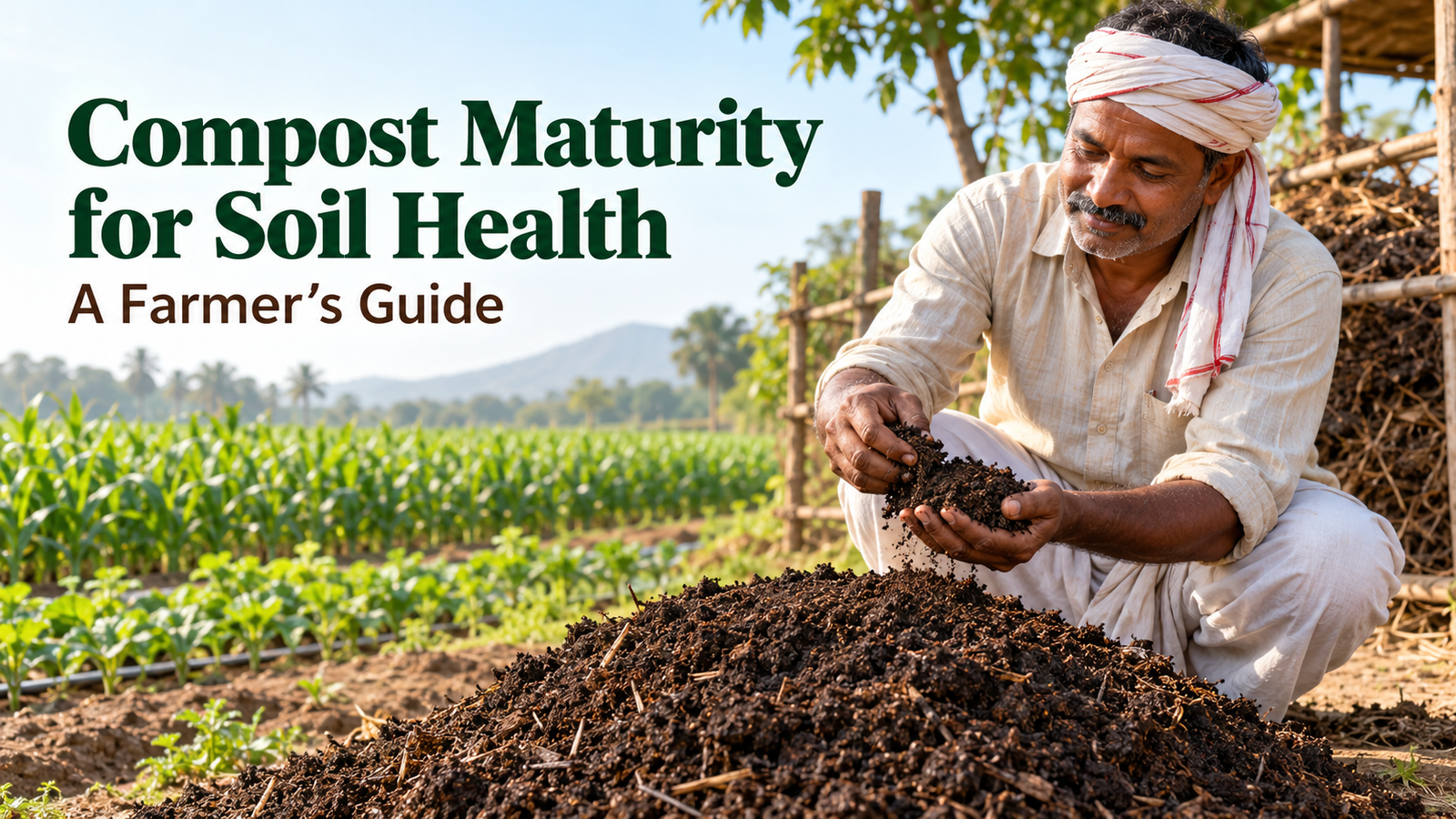
Compost Maturity for Soil Health: A Farmer's Guide
Compost maturity for soil health is an important consideration before adding organic material to crop fields. Finished compost can contribute organic matter and nutrients, but material that is still actively decomposing may temporarily tie up nitrogen, generate heat or contain compounds that inhibit sensitive seedlings. Farmers can make better decisions by checking how compost was prepared, cured and stored.
What Is Mature Compost?
Mature compost is organic material that has passed through active decomposition and a curing phase. Its characteristics are relatively stable, although appearance alone cannot prove safety or quality. Maturity is different from sanitation: a compost pile may look finished without having undergone adequate pathogen-reduction conditions.
Stability versus maturity
Stability describes how slowly organic material continues to decompose. Maturity describes whether compost is suitable for plant growth without phytotoxic effects. Both matter when compost is used near seeds or young roots.
Why curing matters
After the hot, active phase, compost benefits from a curing period. Microbial activity continues, temperatures decline and unstable decomposition products can dissipate. Curing time varies by feedstock, pile management and weather.
How to Recognize Compost That May Be Ready
Use several observations together instead of relying on a single test.
These are screening clues, not laboratory certification. Compost for commercial or sensitive applications may need tests for maturity, salinity, contaminants and pathogens.
Risks of Applying Unfinished Compost
Using organic material too early can create avoidable crop problems.
Temporary nitrogen immobilization
High-carbon materials that continue decomposing in soil can encourage microorganisms to use available nitrogen, reducing the amount temporarily accessible to crops. This is particularly relevant when undecomposed straw or woody materials are incorporated.
Ammonia and organic-acid stress
Unfinished compost may contain ammonia or organic acids at levels that can affect germination or root development. A simple germination comparison with a clean control can reveal potential issues, though it does not replace professional analysis.
Salinity and contamination
Compost made from certain manures or other feedstocks may have elevated soluble salts. Poorly controlled source materials can also introduce contaminants. Verify feedstock origin and testing where risk is significant.
Practical Compost Maturity Checklist
Before applying compost to a large field, review the following steps.
- Check the feedstock source and whether the composting process was managed and documented.
- Confirm the pile has completed active heating and had sufficient curing time.
- Inspect odour, texture and moisture; investigate ammonia or sour smells.
- Consider a small seed-germination trial with a control sample.
- Use laboratory maturity, electrical conductivity and safety tests where crop sensitivity or feedstock risk warrants them.
- Use a soil test and crop nutrient plan to determine how compost fits into the fertilizer program.
How to Use Mature Compost in a Soil Health Program
Compost can be one component of a wider strategy involving crop residues, cover crops, soil testing, appropriate irrigation and balanced fertilization.
Match application to the field
Consider soil texture, crop stage, rainfall, irrigation method and existing nutrient levels. Compost is not a universal substitute for every nutrient requirement, and application rates should reflect measured compost nutrient content and local recommendations.
Integrate compost with microbial inputs
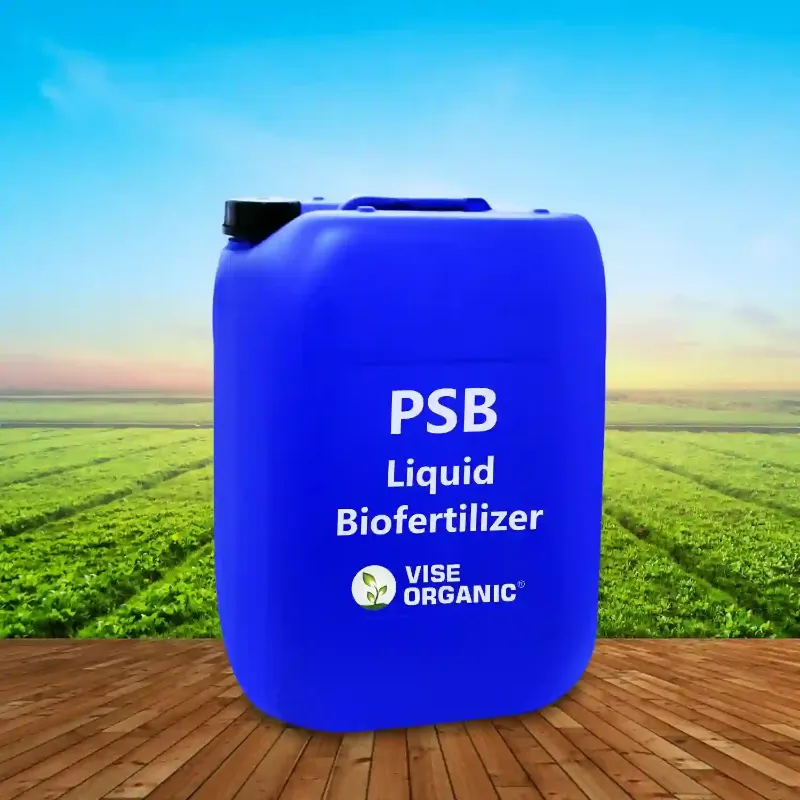
Some biofertilizer application programs use well-decomposed compost or farmyard manure as a carrier. However, not every inoculant is compatible with every compost batch or mixing method. Follow the specific manufacturer's instructions for mixing, application timing and storage. Explore Vise Organic's Phosphate Solubilizing Bacteria and Azotobacter Liquid Based for product-specific guidance.
Evaluate results over time
Track crop growth, soil organic matter trends, nutrient availability and water management over multiple seasons. A field comparison can be more informative than assuming an immediate yield increase from a single application.
Frequently Asked Questions
Does dark colour prove compost is mature?
No. Dark colour is only one clue; temperature behaviour, odour, stability and plant-response testing provide additional evidence.
Can unfinished compost harm seedlings?
It can. Active decomposition, ammonia, organic acids or elevated salts may impair germination or early growth under some conditions.
Is compost the same as a biofertilizer?
No. Compost is decomposed organic material, while a biofertilizer is a formulation containing selected beneficial microorganisms. They can serve different, complementary roles.
Can I mix biofertilizer into compost?
Only when the inoculant label or qualified adviser supports that method. Use appropriately cured material and follow the specified timing and dosage.
How long does compost take to mature?
There is no single reliable number. Feedstocks, temperature, moisture, aeration, pile size and curing practices all affect the process.
Should compost be tested before use?
Testing is especially useful for large applications, high-value crops, sensitive seedlings or uncertain feedstocks. Nutrients, salinity, maturity and relevant contaminants may need evaluation.
Does compost replace soil testing?
No. Soil tests help determine nutrient needs and constraints, while compost analysis helps estimate what the amendment contributes.
Conclusion
Mature compost can support a thoughtful soil management program, but good results start with feedstock quality, adequate processing and crop-specific decisions. Avoid judging readiness by appearance alone, and match compost use to soil tests and field conditions.
For complementary microbial nutrient-management options, browse the Vise Organic product range and ask the Vise Organic team for product-label guidance suited to your crop and application method.