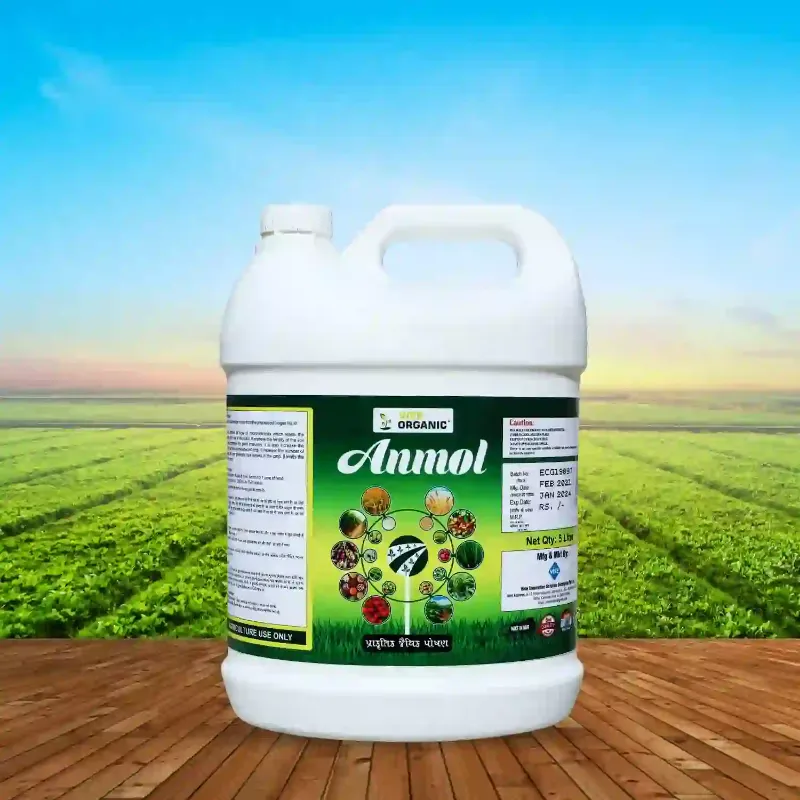
Choosing between biofertilizer vs chemical fertilizer can feel confusing when both are sold for crop nutrition. The useful starting point is to ask what each input actually does. Mineral fertilizers supply nutrients; biofertilizers use beneficial microorganisms to support processes such as nitrogen fixation or nutrient mobilization. A sensible nutrient plan considers your crop, soil test, irrigation and the product label rather than treating every bottle or bag as interchangeable.
This guide helps farmers and agricultural-input buyers compare their roles, ask better buying questions and plan applications without relying on blanket fertilizer-replacement claims.
Biofertilizer vs chemical fertilizer: the main difference
Think of the comparison as nutrient supply versus biological support. Both can belong in a carefully planned programme, but their quantities, timing and expected effects are different.
| What is the active component? | Beneficial microorganisms in a suitable formulation. | Declared plant nutrients in a mineral formulation. | What is its role? | Supports biological processes involved in nutrient availability. | Supplies a measurable quantity of nutrients. | What guides selection? | Crop compatibility, organism, viable quality and label directions. | Soil-test findings, nutrient grade and crop requirements. | What affects performance? | Storage, application method and soil conditions. | Rate, placement, timing, moisture and nutrient losses. | Is substitution automatic? | No; fertilizer reductions need a crop-specific recommendation. | No; nutrient supply alone does not replace every soil-management practice. |
What biofertilizers do in crop nutrition
Biofertilizers are biological inputs rather than a universal NPK [Nitrogen, Phosphorus and Potassium] dose. Different organisms perform different functions, so the organism listed on the label matters.
Nitrogen-fixing microorganisms
Certain microorganisms support biological nitrogen fixation. Crop compatibility is especially important for symbiotic inoculants such as Rhizobium. Select a formulation labelled for the intended crop instead of assuming that every nitrogen-fixing product suits every field.
Nutrient-solubilizing and mobilizing organisms
Other formulations support processes that make some soil nutrients more accessible to plants. This role is different from adding a bag containing a declared weight of mineral nutrients. Existing nutrient reserves and field conditions still matter.
Why results vary between farms
Biological inputs depend on living organisms. A suitable product can still disappoint if it is expired, stored incorrectly or applied through an unsuitable method. Record conditions and follow label instructions to make field comparisons useful.
What chemical fertilizers contribute
Mineral fertilizers allow farmers to supply specified nutrients at calculated rates. Their usefulness depends on matching the nutrient source and quantity to the crop rather than applying the same programme to every field.
Read the nutrient grade
Check which nutrients the formulation supplies and their declared concentration. A liquid microbial product and a liquid mineral fertilizer can look similar while serving different purposes. The formulation details are more informative than the word “liquid.”
Match timing and placement to the crop
Use local agronomic recommendations to decide when and where nutrients are needed. Irrigation, rainfall and the crop stage influence application choices. Increasing the quantity without diagnosing the problem can waste money.
Can farmers use both in one nutrient programme?
Integrated Nutrient Management combines appropriate nutrient sources and soil-management practices. It offers a more useful planning framework than declaring one type of input best for all crops.
- Start with a soil test. Review soil conditions and nutrient findings with a qualified local adviser.
- Set a crop-specific plan. Consider the crop, season, available organic materials and irrigation.
- Choose a compatible biofertilizer. Confirm the organism, crop suitability, application route and expiry date.
- Follow mineral-fertilizer recommendations. Do not cut a recommended dose solely because a biological product is being added.
- Keep application records. Note dates, quantities, weather, crop observations and harvest results.
Using both in a programme does not mean mixing them in one tank. Confirm mixing compatibility on the labels or with the manufacturer before combining microbial formulations with fertilizers or crop-protection products.
Five checks before buying a biofertilizer
A clear label and a suitable application plan matter more than a broad promise of higher yield. Before buying, check:
Ask the supplier to clarify incomplete information. Avoid translating another crop's trial result into a guaranteed saving for your own farm.
Explore Vise Organic inputs and application guides
Vise Organic lists Rhizobium Liquid Based among its agricultural inputs. Confirm crop suitability and current label instructions before selecting it for a nutrient programme.
For preparation and handling, read our biofertilizer seed-treatment guide for rabi crops and liquid biofertilizer storage and handling guide. These practical steps complement product selection.
Frequently asked questions
1. Is biofertilizer the same as organic manure?
No. Biofertilizers contain beneficial microorganisms; organic manure is an organic material used in soil and nutrient management. They have different roles, even when used in the same programme.
2. Can biofertilizers completely replace chemical fertilizers?
There is no universal replacement rule. Decisions depend on crop requirements, soil findings and locally validated recommendations. Do not assume complete replacement from a product's general description.
3. Is every liquid NPK product a biofertilizer?
No. Liquid describes physical form. Read whether the active components are microorganisms, mineral nutrients or another formulation.
4. Can I mix biofertilizers with pesticides?
Only when compatibility is confirmed for the specific formulations. A crop-protection product may affect microbial viability, so obtain label-based guidance before mixing.
5. How soon should I expect visible results?
There is no reliable universal timeline. The organism, crop stage, application route and growing conditions all influence the outcome. Evaluate records over an appropriate crop period.
6. Does a biofertilizer label prove suitability for certified organic farming?
No. Check the specific input against your certification programme's requirements. Product category names alone are insufficient.
Conclusion: choose inputs by their role
The biofertilizer vs chemical fertilizer comparison becomes clearer when you separate microbial activity from direct nutrient supply. Start with soil information, choose crop-appropriate inputs and follow a documented nutrient plan. Review the outcome before changing the next season's programme.
Explore Vise Organic products or contact Vise Organic with your crop, acreage, soil-test information and intended application method.